工学部長・研究科長挨拶
Message from the Dean
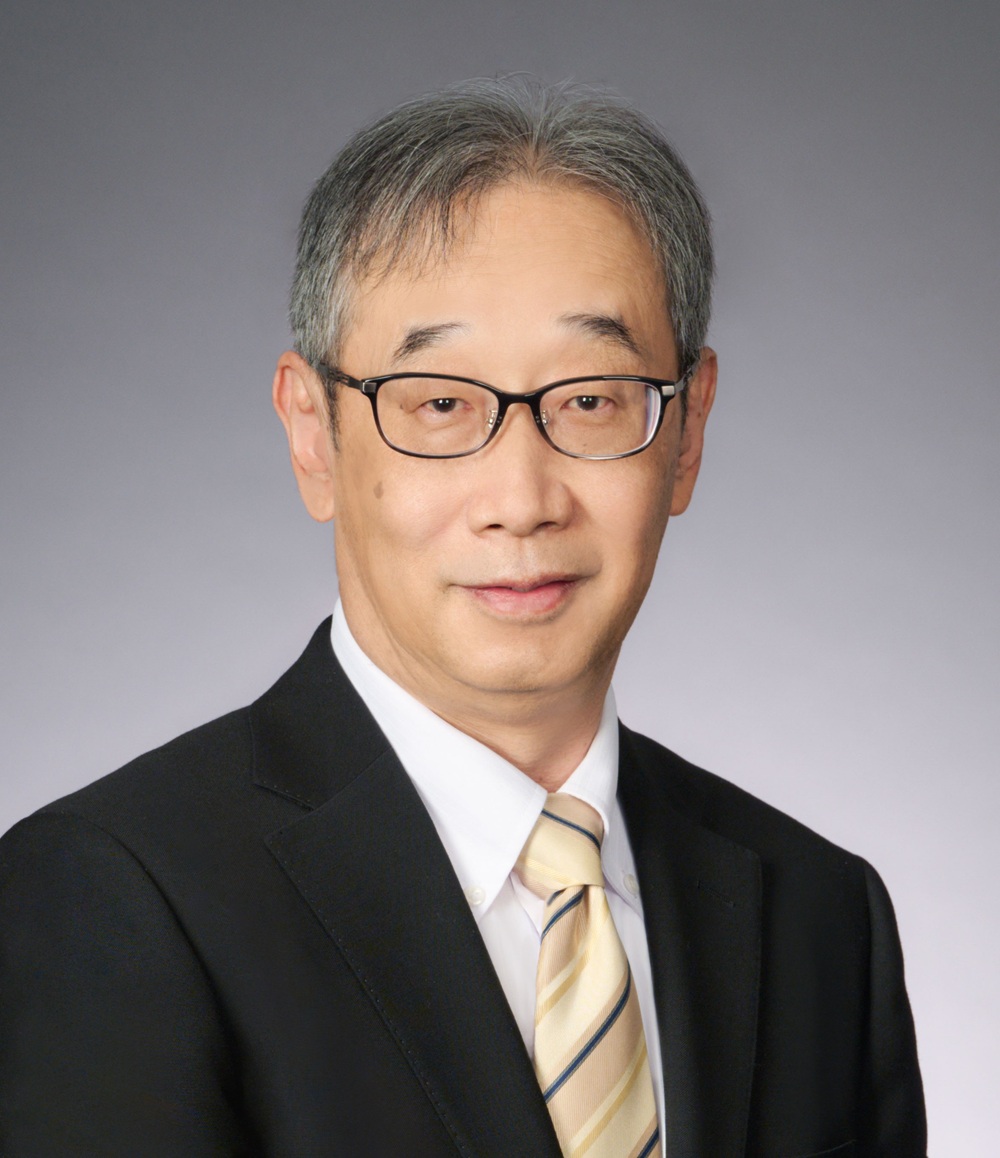
Overview of the Nagoya University School of Engineering and Graduate School of Engineering
The history of the Nagoya University School of Engineering began in 1942, when the Nagoya University School of Science and Engineering was reorganized into two faculties: the School of Engineering and the School of Science. Since then, we have continued to change and grow in response to changing times and societal demands. Today, the School of Engineering is comprised of seven departments, and the Graduate School of Engineering is comprised of 18 majors, with 702 faculty and staff, 2,936 undergraduate students, and 1,776 graduate students (as of May 1, 2025), making us the largest school (organization) at Nagoya University and boasting a strong presence.
"Engineering" is a collection of academic fields aimed at solving social problems, and the Faculty and Graduate School of Engineering are the organizations thought to be responsible for promoting this. In this sense, strong collaboration with industry and government, as well as interdisciplinary collaboration with other fields and departments, is important.
Our School of Engineering and Graduate School of Engineering are home to numerous problem-solving research fields that have already achieved a high level of social recognition, including GaN research, low-temperature plasma science, quantum technology, data-driven materials development, aerospace, mobility, and disaster prevention and mitigation. However, social issues in these fields have recently become increasingly complex, and the limits of resolving them through single-disciplinary knowledge and technology are beginning to become apparent. To overcome this, we must not only promote interdisciplinary collaboration within the School of Engineering and Graduate School of Engineering, but also interdisciplinary collaboration with other departments and institutions more than ever before in both education and research. Furthermore, it is important to promote various policies and support measures to develop these into world-leading international problem-solving research centers, while making the most of collaborations with overseas partner universities.
Overall, the realization of the School of Engineering, which I mentioned as a combination of industry-academia collaboration and interdisciplinary fusion, will lead to the resolution of many social issues and ultimately to the consideration of social well-being itself. From this perspective, we aim to boldly tackle the various problems faced by modern society, produce talented people who can play active roles as global leaders, and continue to contribute to society by valuing high-quality research results.
Below, we introduce some of the key initiatives of the School of Engineering and Graduate School of Engineering at Nagoya University.
Education
We have established a seamless educational system that integrates undergraduate and graduate programs, implementing a 3+3+3 education system consisting of three years of basic education, three years of specialized education (four years of undergraduate studies plus two years of master's course), and three years of advanced specialized education (three years of doctoral course). One of the reasons for introducing this system is the idea of late specialization (selecting a specialty at the end of the third year rather than at the time of enrollment), which allows students to select their specialty at an appropriate age. Furthermore, the Digital Innovation Engineering course, which began in 2025, promotes the development of digital transformation talent that can meet the demands of industry.
In addition, we offer a variety of programs for transfer students, students entering from master's or doctoral programs, those entering as working professionals with doctoral degrees, and students whose native language is English. We have a long-term course system (a system that allows students to continue for as long as six years with three years of enrollment), allowing students to pursue their degree with ample time to spare. Furthermore, we have established a variety of "general engineering subjects" and offer industry-academia creative education and entrepreneurship training, making our education easy to learn and engaging.
In the master's and doctoral programs, the university has collaborative graduate school agreements with national research institutes, such as the National Institute of Advanced Industrial Science and Technology (AIST) and the National Institute for Materials Science (NIMS). Utilizing this system, many master's and doctoral students conduct research at Nagoya University and national research institutes while receiving a salary. Furthermore, the university offers a variety of educational programs, including the Joint Degree Program, WISE Program (Doctoral Program for World-leading Innovative & Smart Education), and G30 program, creating an environment that fosters highly skilled engineers who are expected to work on a global scale.
Research
We have seven departments and 18 majors. While these departments and majors provide education independently, research activities are expanding across disciplines. As mentioned at the beginning, interdisciplinary collaboration is extremely important in solving social issues that are extremely complex and difficult to find answers to. The Graduate School of Engineering is home to many problem-solving research fields that are already highly recognized in society, including GaN research, low-temperature plasma science, quantum technology, data-driven materials development, aerospace, mobility, and disaster prevention and mitigation.
In addition, we have produced Nobel Prize laureates and Nagoya University’s first Distinguished Professor and enjoy an exceptionally high level of international recognition. Many laboratories with strong international reputations are active across a wide range of research fields. Furthermore, graduate students often play central roles in research at the School and Graduate School of Engineering, and it is not uncommon for them to play important roles in supporting cutting-edge research.
In terms of organizational management, we are committed to running the Flight Engineering Education and Research Center, Crystal Engineering Research Center, Deep Tech Serial Innovation Center, etc., while also establishing a system for conducting integrated research and education that transcends the boundaries of departments and majors. Taking advantage of its favorable location in Aichi Prefecture, an industrial cluster, the university is actively contributing to the enrichment and sustainability of society through numerous industry-academia and international collaborations, led by faculty members of the Graduate School of Engineering.
Promoting diversity
Ensuring diversity within an organization is extremely important. One of the most recent challenges in diversity is the low number of female applicants to the School of Engineering. This is not just a problem for our university, but for the entire country. A 2023 survey by the OECD found that Japan ranked last among its 38 member countries in the proportion of female students pursuing engineering studies. While there are likely multiple factors contributing to this, one simple reason is the long-standing, unconscious perception that engineering is a male-dominated field. To address this, Nagoya University's Faculty of Engineering will implement a recommendation-based entrance exam for women in two departments starting with the 2023 academic year and expand this to six departments by the 2025 academic year. We hope this will serve as an opportunity to improve the current imbalance in the number of male and female applicants to the School of Engineering and bring about a normal balance. In previous tests, highly qualified applicants have been accepted, marking a definite step towards improving diversity. We will continue our diversity promotion activities until a balanced and desirable School of Engineering becomes the norm.
Promoting Internationalization
We have an independent organization, the International Academic Office, which employs four full-time faculty members and two administrative staff members. The Office provides comprehensive support to ensure the smooth operation of international exchange, including assistance for international students, support for Japanese students studying abroad, and English language education. The Office also implements international exchange and international academic collaboration projects with government agencies. International exchange within the Faculty and Graduate School of Engineering has become increasingly active.
We also play an important role in the "Inter-University Exchange Project: Interdisciplinary Japan-US Collaborative Human Resource Development with an Emphasis on Differential Growth," which was adopted in 2023. The Nagoya University Summer Intensive Program (NUSIP) and the Japan-US-Canada Advanced Collaborative Education Program (JUACEP) foster active exchanges with international students. The G30 Program (Automotive Engineering, Chemistry, and Physics) also attracts many applicants each year, and its international recognition is growing year by year. Regarding organizational international collaboration, we are promoting high-level collaboration and exchanges with strategic partner universities, including the National University of Singapore (Singapore) and North Carolina State University (USA) as well as the University of Queensland (Australia) and Chulalongkorn University (Thailand).

名古屋大学
工学部長・工学研究科長
鈴木 達也
名古屋大学工学部の歴史は、1942年に名古屋大学理工学部が工学部と理学部の二学部に生まれ変わったときから始まりました。その時から、時代の変化と社会の要請に対応して、私たちは変化と成長を続け、現在の工学部は7学科・大学院工学研究科は18専攻で構成され、教職員数702名、学部学生数2,936名、大学院学生数1,776名(2025年5月1日現在)と名古屋大学で最も大きな部局(組織)として、高いプレゼンスを誇っています。
「工学」は社会課題を解決することを目的とした学問領域の集合体であり、これを推進する組織として、工学部・工学研究科は開かれた組織でなければなりません。その意味で産や官との強固な連携、あるいは他領域・他部局との学際的な連携は極めて重要です。これからの工学部・工学研究科における教育・研究は、工学における各基盤分野の発展に加え、これらの視座に立って推進されなければなりません。
本学の工学部・工学研究科には、GaN研究、低温プラズマ科学、量子技術、データ駆動型材料開発、航空宇宙、モビリティ、防災・減災など、すでに社会的に高いレベルで認知されている課題解決型の研究領域が数多く存在します。一方で、これらの領域における社会課題は、昨今、複雑化の一途をたどっており、単一分野の知識や技術による解決に限界が見え始めています。これを打破するため、教育・研究の両面において、工学部・工学研究科内での異分野融合はもとより、他部局、他機関との学際的連携を今まで以上に推進しなければなりません。さらには、海外協定校との連携等を最大限活用しつつ、これらを世界有数の課題解決型の国際的研究拠点へと発展させるべく、様々な施策・支援を推進していくことも重要です。
総じて、産学官連携と異分野融合を両輪とした開かれた工学部・工学研究科の実現が多くの社会課題解決につながり、ひいては社会の幸福そのものの創出へと通じることになります。このような視座のもと、工学部・工学研究科では、現代社会で直面する諸問題に果敢に挑戦し、グローバルなリーダーとして活躍できる人材を輩出するとともに、高い研究成果を生み出すことを通じて社会に貢献し続けたいと考えています。
以下では、名古屋大学工学部・工学研究科の重点的な取り組みのいくつかをご紹介します。
名古屋大学工学部・工学研究科の教育
名古屋大学の工学部・工学研究科では、学部・大学院を一体としたシームレスな教育体制を構築し、基礎教育3年、専門教育3年(学部4年+博士前期課程2年)、高度専門教育3年(博士後期課程3年)の【3+3+3型教育システム】を実施しています。このシステムを導入している背景の一つとして、適切な年次で専門分野を選択する Late specialization(入学時ではなく3年次終了時点での専門分野選択)の考え方があります。さらには、2025年度から始まったデジタルイノベーション工学コースでは、産業界からの要請に応えるDX人材の育成を推進しています。
また、編入学者、修士課程・博士課程からの入学者、社会人博士としての入学者、英語を母国語とする入学者に向けた多様なプログラムを用意しています。博士学生に対しては、充実した経済的支援も用意されており、経済的不安を感じることなく履修が可能となっています。社会人博士については、長期履修制度(3年間の学費で最長6年間在籍できる制度)を設け、ゆとりをもって学位取得に挑戦していただけます。さらには、様々な「総合工学科目」を設置し、産学共創教育やアントレプレナー教育を提供するなど、学びやすさと魅力的な教育に向けた創意工夫を行っています。
大学院前期課程(修士)、後期課程(博士)では、産業技術総合研究所、物質・材料研究機構など国立研究機関との連携大学院協定を結んでいます。この制度を利用して多くの修士課程、博士課程学生が給与を得ながら、名古屋大学と国立研究機関で研究を実施しています。その他、ジョイントディグリープログラム、卓越大学院プログラム、G30など多彩な教育プログラムを活用し、グローバルに活躍できる高度工学系人材を育成するための環境が整っています。
名古屋大学工学部・工学研究科の研究
工学部・工学研究科には7つの学科・18の専攻があります。これらの学科・専攻は独立して教育を行っていますが、研究活動は活発な横展開が広がっています。非常に複雑で答えを見出すことが難しい社会課題を解決する上では、冒頭でも述べた異分野融合が非常に重要になってきます。工学研究科には、GaN研究、低温プラズマ科学、量子技術、データ駆動型材料開発、航空宇宙、モビリティ、防災・減災など、すでに社会的に高いレベルで認知されている課題解決型の研究領域が数多く存在します。
また、工学研究科はこれまで、ノーベル賞受賞者や名古屋大学初となる卓越教授を輩出しており、国際的にも極めて高い知名度を誇っております。他にも国際的に広く認知されている研究室が広い分野にわたって数多く在籍しています。また、工学部・工学研究科では大学院生が研究の中心的役割を担う場合も多く、世界最先端の研究を支える重要な役割を果たすことも珍しくありません。
組織運営面でも、フライト総合工学教育研究センター、クリスタルエンジニアリング研究センター、ディープテック・シリアルイノベーションセンター等の運営にコミットしつつ、学科・専攻の枠を超えた融合的な研究と教育を実施する体制を整えています。特に産業の集積地である愛知県に立地するという好条件を生かし、多くの産学連携、国際連携による研究開発が工学研究科の教員を中心にして進められ、社会がより豊かになり、それを持続可能とすることに積極的に貢献しています。
名古屋大学工学部・工学研究科のダイバーシティ推進
組織においてダイバーシティを確保することは大変重要です。ダイバーシティに関して、顕在化している直近の課題の一つは、工学部における女子学生の志願者数が少ないことです。これは本学に限らず我が国全体の課題とも言えます。2023年12月に発表されたOECDの調査では、加盟38か国の中で日本は工学分野に進学する女子学生の比率が最下位でした。そこには、複数の要因があると思いますが、一つの単純な理由として、工学部は男性社会という昔からの無自覚な意識が働いていると考えています。これを払拭するため、名古屋大学工学部では2023年度入学者から推薦入試女子枠を2学科で実施し、2024年度入試から4学科に、2025年度入試からは6学科に拡張しました。工学部への男女志願者数がアンバランスな現状を改善し、正常なバランスをもたらすための契機をとなることを期待しています。これまでの実施では、大変優秀な志願者が合格し、ダイバーシティ向上に向けて、確かな一歩を踏み出しました。バランスのとれた望ましい工学部・工学研究科が常態化するまで、ダイバーシティ推進活動を続けてまいります。
国際交流
工学研究科には、独立した組織である国際交流室があり、4名の専任教員、2名の事務スタッフが勤務しています。国際交流室では留学生支援、日本人学生の留学支援、英語教育などの国際交流の円滑な運営のための充実したサポートを実施しています。また、政府機関による国際交流・国際学術連携プロジェクトを実施するなど、工学部・工学研究科の国際交流はますます活発になっています。
2023年度に採択された「世界展開力強化事業:微分型成長を重視した分野横断型日米協創人材育成」では、工学研究科も重要な役割を果たしています。国際自動車工学サマープログラム(NUSIP)や日米加先駆的協働教育プログラム(JUACEP)では、海外の学生との活発な交流が展開されています。G30プログラム(自動車工学、化学系、物理工学、環境土木工学)におきましても、毎年多くの志願者を集めており、その国際的認知度は年々向上しています。
組織的な国際連携に関しても、シンガポール国立大学(シンガポール)、ノースカロライナ州立大学(アメリカ)をはじめとする戦略的パートナー大学やクイーンズランド大学(オーストラリア)やチュラロンコン大学(タイ)等とのハイレベルな連携や交流を推進しています。